the lowdown: mostra festival


it’s been a few years now of us waving the flag for small intimate festivals that put their community at the forefront. with notable experiences across the uk and europe, these types of festivals are what we look for each summer. no more than 2000-3000 capacity that leaves space for exploration, experimentation and dialogue. barcelona-based mostra festival is another one of this kind - 1000 capacity with one stage, taking place across four days. proudly independent and not-for-profit, mostra festival has been taking place for five years now with the fifth edition taking place next weekend from the 12th - 15th march.
kicking off the cultural season in the city, mostra strives to champion artists with their own distinct voice and vision, who are adding to the conversation and pushing music forward. a fierce champion of their local community, mostra brings together a wealth of local and international talent - over the years they’ve invited the likes of marylou, carrier, cio d’or, patrick russell, peter van hoesen, slowfoam, carmen villain, ulla, perila, laura bcr, cobahn, and neel to name few as well as hosted extra mostra events in london and berlin in collaboration with introspective electronics and midgar. striving for more inclusivity and sustainability with everything they do, mostra work to minimise the environmental impact of the festival and leave a positive social footprint. every person that attends or is involve with the events is made to feel like an active contributor and this has to the incredibly special community and reputation that they have built in these short five years.
with the next edition only a few days away, we caught up with the team behind mostra to chat about the early beginnings of the event, why it was founded, what the journey has been like so far and a teaser of what to expect during next week’s edition.
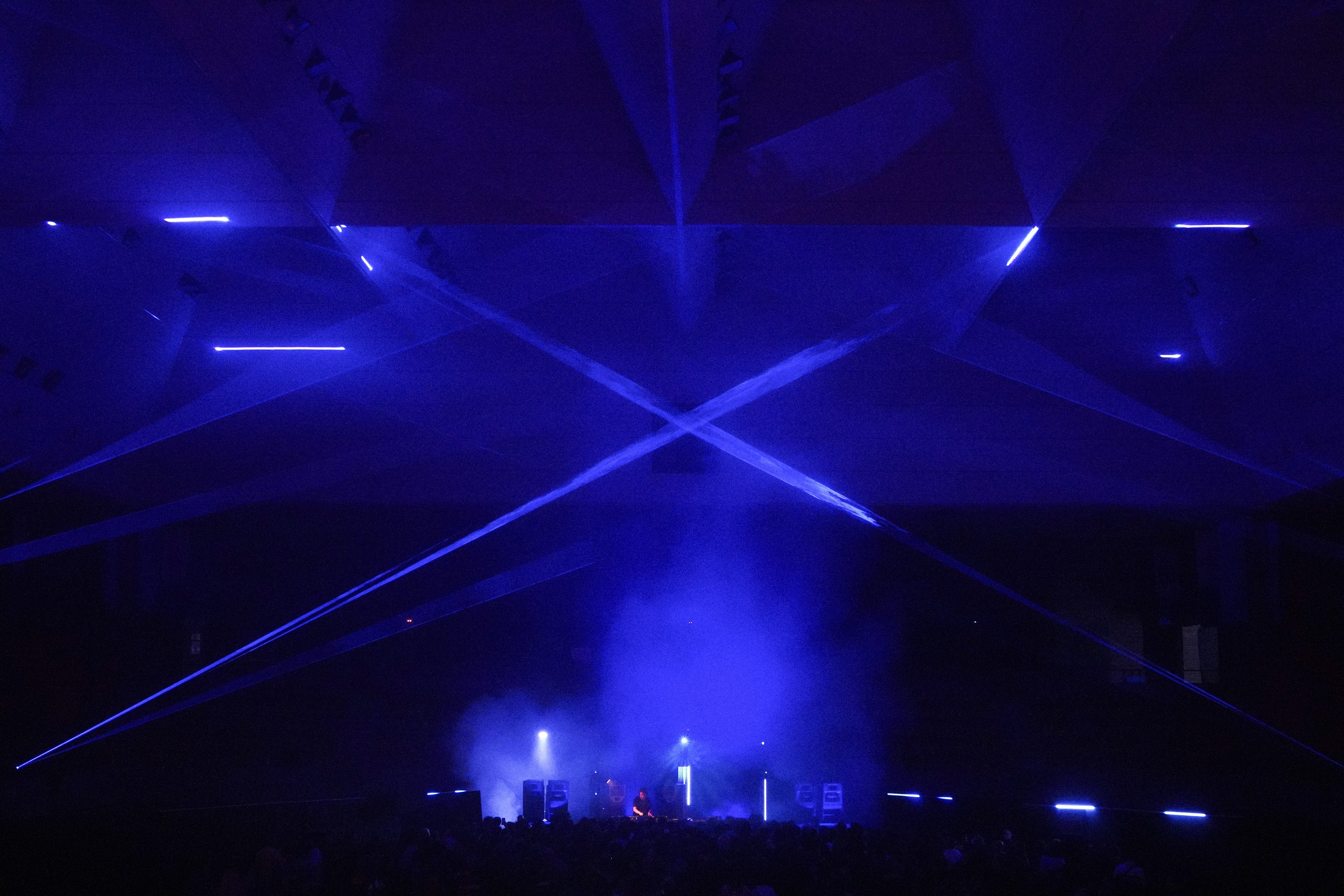
Hey! We’re here to chat about the upcoming 5th anniversary edition of Mostra festival which will be taking place next month. We’re super excited to witness it unfold this year - how are you feeling about the upcoming edition?
We feel a mix of adrenaline and deep determination. This 5th anniversary marks a major turning point for us. By moving the dates to March, out of the traditional Easter weekend when we used to hold the festival, and centralizing the experience at the Vall d’Hebron Olympic Pavilion, this upcoming edition feels less about pressure and more about trust.
After five years, we know who we are, what we want to offer, and who we’re doing this for. There’s a sense of maturity and focus that makes this edition feel especially meaningful. For us it is a moment of alignment rather than a milestone we need to perform.
What does it feel like to reach 5 years of Mostra? Have you planned anything special for this year’s edition?
Reaching year five as an independent, non-profit cultural project feels like a victory for the underground. To celebrate, we’ve evolved our “sonic liturgy.” For the first time, we are extending the dancefloor sessions at the Pavilion until 03:00 am on Friday and Saturday, allowing the energy to settle into a higher density. We’ve also curated an Opening Ceremony at Casa Montjuïc on Thursday specifically for horizontal, immersive sounds to set the ritualistic tone of the weekend. And, of course, our guest country this year is France, which will bring a unique focus to both our lineups and our Mostra’m debates as well as to the Fira to be held at the very same Pavilion on Saturday, including a few French labels and collectives.
Going back to the beginning, how did Mostra begin? What was the motivation and inspiration behind starting the event series?
Mostra was born from the silence of the 2020 lockdowns. We were tired of the “macro-festival” model that dominates Barcelona and other cities, that is, impersonal, commercial and repetitive from our point of view. We wanted to prove that a festival could be a tool for cultural transformation, rooted in its city. The motivation was to create a proudly small alternative that prioritized the artist’s narrative over the sponsor’s logo. We wanted to return to the dancefloor, but with a different set of values. From the start, Mostra was about care: a project that comes straight from the heart, out of passion.
What draws you to organising events? What is it about this specific creative format that motivates and inspires you?
What motivates us is the desire to create an experience that operates outside the logic of the algorithm. This creative format is powerful because it’s inherently human and unpredictable. We are inspired by the friction between the avant-garde and the city; by taking over non-conventional spaces and filling them with a community that shares our values of independence and non-conformity. To us, an event is a statement of intent. It’s the most direct way to prove that ‘another way’ of experiencing culture is not only possible but necessary for the health of the local scene.
What are some of the most formative events that you’ve been to that have helped shape the ethos of Mostra?
We’ve always been inspired by projects with an uncompromising niche identity. Going to many festivals such as Freerotation, Waking Life, Terraforma, Labyrinth, persona, Monument, Paral·lel, La Nature, CTM, Atonal… has also been of great influence for many of us. They all share a focus on a more communal experience, far from being commercial, and well-curated events where the audience felt somehow involved, or at least consciously present, rather than managed. These experiences taught us that intensity doesn’t come from scale, but from intention and trust between artists, organisers and the audience.
What inspired you to do the one-stage concept for the festival? Personally this is my favourite way to experience a festival as it encourages a communal experience with everyone at the same set and less distractions trying to decide who/what you want to see.
Exactly, we want to kill FOMO. The one-stage concept is our way of fighting against the “buffet” culture of macro-festivals. When there are no clashes, the artist has the undivided attention of a curious audience. It allows the set to breathe (some of our sets might even exceed 3 hours) and it fosters a collective listening experience. Everyone in the pavilion is breathing the same rhythm at the same time. It’s about building a shared narrative, not a fragmented one.
What is your approach to curating your lineups and programming for the festival?
It’s the triumph of criteria over the algorithm. We program with a storytelling mindset. We look for artists with a unique, honest voice, often outside the usual Summer circuit. We balance legendary figures who have shaped techno like Surgeon this year with avant-garde local newcomers like R-010. Our rule is: if it doesn’t move us emotionally or intellectually, it’s not for Mostra. We prefer the risk of an experimental live set over the safety of a “headliner” you can see ten times elsewhere over the festival season.
Supporting the local community is an important aspect of the Mosta programme - how would you describe the scene in Barcelona at the moment? What are some of the stand outs right now and what would you say makes it special?
The Barcelona scene is incredibly resilient. Despite a lack of institutional support for club culture, at this very moment we find that there is a bubbling underground of collectives and labels, and that’s is very positive for our city. On the other hand, we see Mostra as a platform to amplify this local vitality, ensuring that local artists don’t just “open” the festival but share the stage as equals with international names.
Who are some of the local artists you are most excited about spotlighting this year?
We are thrilled to have Angel Molina, a local legend who embodies our values of exigency and craft. Also, the live project Àtavic (by ABSIS & Estrato Aurora) is something we are very proud of—it’s pure textural techno. But then there’s Rachael or Muted, both coming from Madrid and on closing duties Friday and Saturday respectively. These aren’t just “local support”; they are world-class artists that define our sound.
Have there been any moments that have changed the way you approach organising events?
The first time we witnessed a full silence during an ambient set at our first edition. It was a revelation. It taught us that the audience is much more demanding and attentive than the industry gives them credit for. It reaffirmed our belief that we don’t need to “dumb down” the programming to be successful. That moment turned Mostra from an experiment into a mission. Many friends and people we know have told us over the years the uniqueness of programming so many horizontal sounds over a single day in the past.
On the other hand, we’ve also had many moments where things didn’t go as planned, where we realised how fragile these ecosystems are: financially, emotionally and socially. These experiences taught us the importance of care, realistic expectations and long-term thinking. And that is where we are now after five years of celebrating Mostra.
Are there any initiatives you are currently working on that you are planning to implement this year or future editions? This could be anything from sustainability to safe space policies.
Our MostraRespect program is central to our identity. We have a gender specialist on the team and strict protocols to ensure a safe, inclusive environment. For 2026, we’re continuing to develop our sustainability roadmap, both environmentally and socially. This includes reducing travel where possible, working with local suppliers, and strengthening our social principles within our range of values and decisions to be taken.
In what ways has running parties impacted your relationship with music?
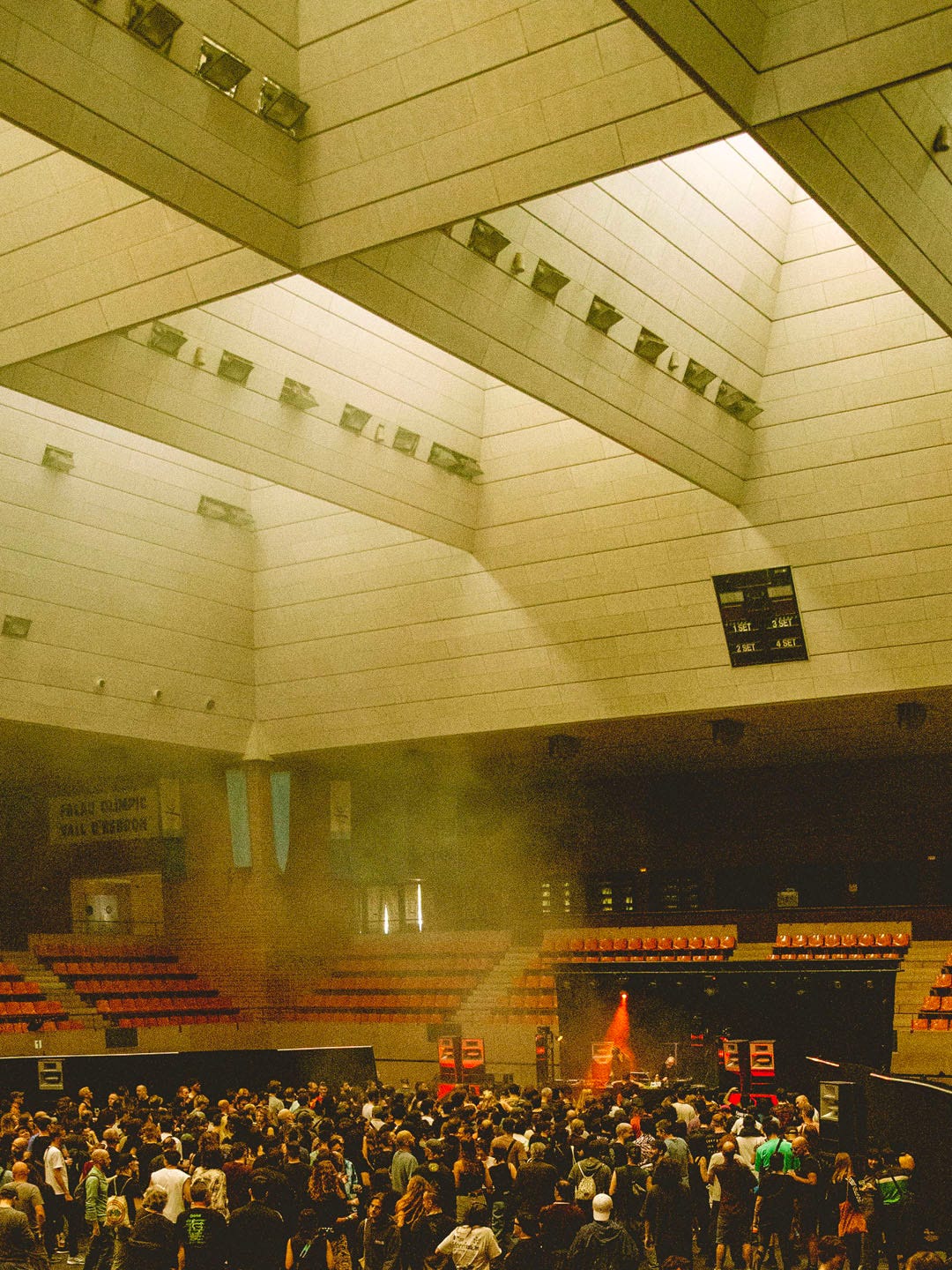
To a certain degree, music stops being something you consume and becomes something you take care of. It also makes you more aware of context: how sound will resonate in the high ceilings of the Pavilion, for example; how people respond; how energy evolves over time. That has fundamentally changed how we listen, both on and off the dancefloor.
It has also deepened our respect for the craft of DJing as a long-form narrative. It reminds us that music is a living force that needs the right space to breathe.
What have been some of your favourite memories from Mostra so far?
There are many: intense live performances under the rain at Montjuïc, long closing sets in the Olympic Pavilion, moments of collective silence before a track drops. It’s difficult to choose, but live performances such as Son of Chi with Hanyo van Oosterom playing bass and singing at Hangar in 2023; other live performances such as those by AtomTM & Tobias or Sonic Wave Collective under a light rain at Castell de Montjuïc in 2024; the closing of the festival by Timnah that very same year; Lotus Eater or Reeko, last year at the Olympic Pavilion... It would be difficult to choose just one.
But some of the most meaningful memories are quieter ones, such as workshops with young guys or conversations at Mostra’m, seeing the Fira become a genuine meeting point... Those moments remind us that the festival is just the visible part of a much deeper cultural and social process, even though the best moment is most probably when the first festival set begins and the music starts to sound. That’s when you realise that all the effort has actually been worth it.
Discussion about this post