The Lowdown: Lithium Radio


last month, on the 22nd february, we kickstarted 9 year anniversary celebrations in my new second home, paris. teaming up with the newly-launched radio station & cafe, lithium radio, we curated a full-day takeover of the station, filling the programme with some of the most exciting voices in the local scene which we will be showcasing over the coming weeks via the interviews that took place on-site with vina konda and ryuu (you can listen to the french version below - written english versions are on the way) plus a whole host of music-focused shows from the likes of souzo, olga b., gillielove and carin kelly :)
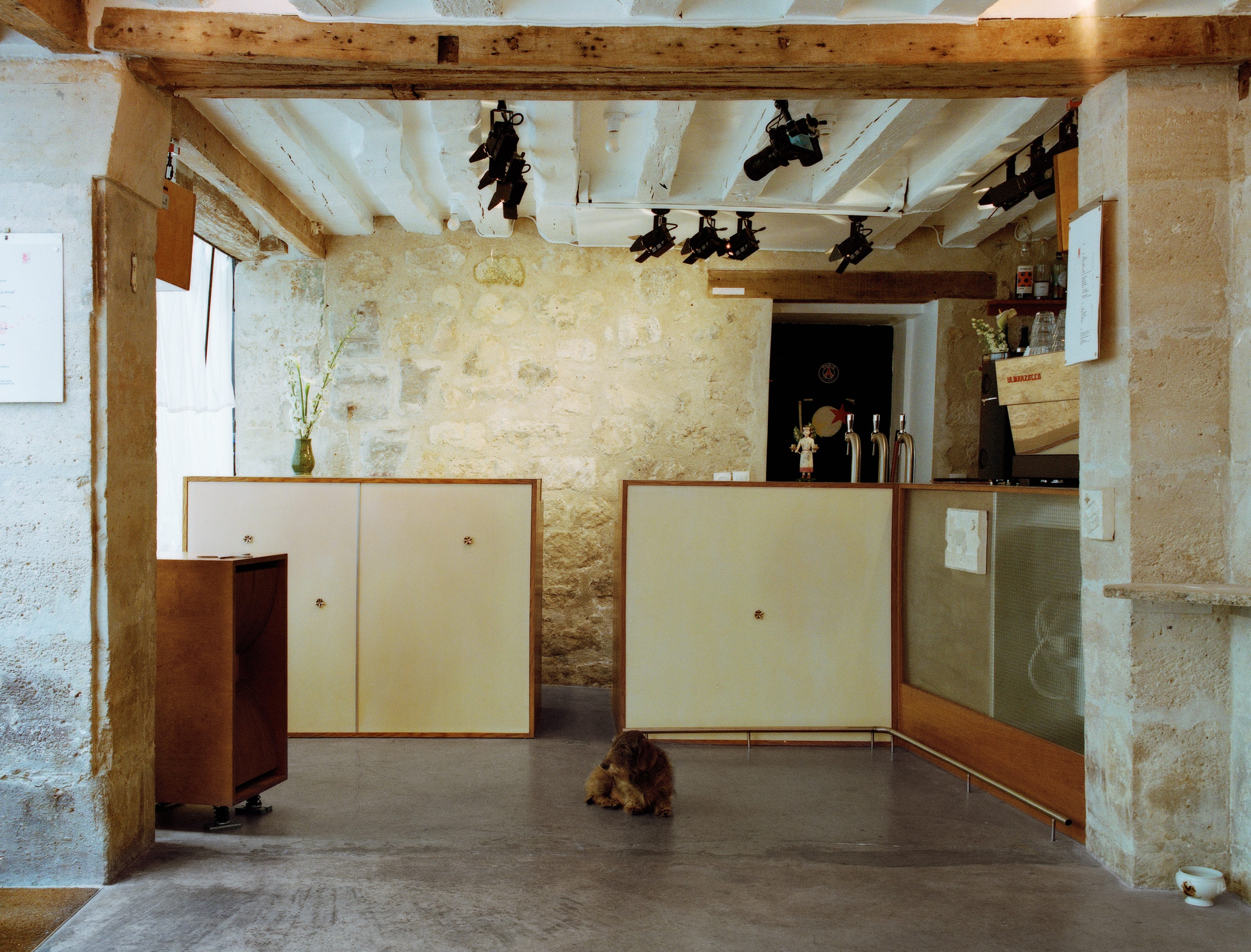
nestled within the cosy corners of the 20th arrondissement in paris, lithium radio was launched in december 2025 with a notable approach to its music programming - focusing on non-club / slow music only. run by a team of four creatives - Pauline, Paulin, Ben, and Marius - they founded lithium radio after spotting a gap in the paris scene, a physical space that acted as both a radio station and cafe, where people could connect with others and music but outside of the traditional modes of the nightlife scene. the radio station offered the team an anti-algorithmic way of offering music programming and discovery to both the city and an online audience. a way to share stories and artists they love and connect with. not every show on the station is music-focused, instead they have an open policy to what people curate for an hour, whether it’s a talk show focused on a topic outside of music, comedy, or strange performances, adding a sense of playfulness to their approach. the cafe is welcoming, brightly-lit and well accomodated with drinks & snacks for guests to enjoy the daily soundtracks whilst they work, meet, read or simply people watch (one of my favourite things to do in paris).
the day was so beautiful and heartwarming. the first time we have ever done anything in a physical space with untitled 909 so it felt really special to be able to host something like this in paris. i’m so grateful for Lithium Radio for giving us the opportunity to curate a full day programme and for the artists and journalists who contributed and all of those who turned up on the day to tune into the conversation and connect with others in the scene. it was such a lovely turnout!
read on to learn more about lithium radio, the team behind it and what they hope to achieve with their new platform <3
Hey Lithium Radio team, how are you doing?
POL1
I have pink hair now
PAULINE
I’m currently Shazaming some of the tracks we heard at Lithium last week! It’s my turn to process all the files from the past shows. So I’ve got music in my ears, a lot on my plate, but everything’s running smoothly :)
MARIUS
Putting in our weekly beer and coffee order while prepping our next radio show on Drexciyan mythology with Ben… so yeah, doing great :)
We’re really excited to be partnering with you in Paris to celebrate 9 years of the platform! You’ve recently launched Lithium Radio, as of the end of last year, what motivated you to start the radio station? Who is the team behind the station?
MARIUS
I’ve been listening to the radio since I was a kid, and I’ve always loved the physicality of it: the long antenna, the crackle while scanning through stations, the careful tuning to get rid of the white noise once you find the right frequency. There was something magical about it, like a bit of wizardry hidden inside science.
Then streaming platforms arrived and slowly replaced those habits. Suddenly people had access to the entire universe of music at their fingertips. Compared to that, radio started to feel very linear: you listen to what’s playing and that’s it.
But over time, something strange happened. Streaming began to feel… restrictive in its own way. Out of millions of songs, you end up listening to algorithmic recommendations. And they can be great, of course, but something was missing.
What I started craving again was curation. Curation with a story, with emotions, with history behind it.
At the same time, amazing web radios were popping up around the world with strong artistic directions. They were connecting generations of musicians and linking distant music communities together.
Slowly we realized: we could actually do this ourselves.
And there was something we felt Paris was missing: a radio station with a physical space open to the public. There are amazing radios in Paris and in France, but none where you can just walk in.
For us that physical connection felt essential.
So when the opportunity came up, we jumped on it. We took over an old art gallery on a small pedestrian street in the 20th arrondissement and turned it into a radio station and a café/bar.
People come for coffee, beers, or to support their friends playing on the radio. They come to read, discover new music, work, or meet other artists. They come with their dogs, their friends, their kids.
And behind all of this there are four people running the project: Pauline, Paulin, Ben and myself: Marius.
What is your career background and how has that been applied to running Lithium?
POL1
I work in design and art direction, mostly in music and arts/culture. And I still do.
During the Covid lockdown I started a small radio station from a huge shared house in the Paris suburbs. It was a bit chaotic but very fun: we broadcast music, sounds, stories… basically anything, all day long throughout the lockdown.
Lots of friends, housemates and family members joined in from near and far, and that’s really how I got into radio.
Since then I’ve worked on smaller radio-related projects, but my design work kept getting in the way.
At Lithium I actually try not to bring too much visual input (that’s handled by very talented designers and I try to keep my hands off it).
Instead I mostly brought some technical knowledge (sound, web, workflow) to keep everything running smoothly. I’ve also been involved in a lot of artist-run spaces and collectives, so I’m used to handling information and organizing collaborative projects.
For a long time I’d been craving a collective project around radio and music. And to be honest, design has started to bore me a little… so Lithium came at the perfect time.
PAULINE
I studied visual arts in Lyon and Brussels, where I explored ways of mixing personal stories with collective memory through images and archival footage often through books, video, and publishing.
That eventually led me into documentary work, first as a researcher, then as an assistant producer on geopolitical formats like Le Dessous des Cartes for Arte, as well as documentaries with Haut & Court Doc and fiction projects with Pathé. Now I work across short films, commercials, music videos, and even large-scale events like the Olympic Games (yes, seriously!).
At the same time I continued my artistic work around archive imagery, collaborating visually with artists like Valentine Branca or B.Z.M.C.
More recently I worked with Daquis Gomisline for the launch of Jah-Jah radio and for the Fête de la Musique, and with the label Records Makers as production director for Turzi’s latest album Gage.
Music has always been a huge part of my life, so joining Lithium felt like an incredibly exciting opportunity.
How have the best few months of running the station been? Any learnings or surprises so far?
BEN
The first few months have been amazing. We’ve been really touched by the enthusiasm around the project and by the number of requests coming from so many talented artists.
It’s been incredibly rewarding to offer a space to producers, DJs and labels who have been part of this scene for years as well as new artists who are still looking for their audience.
The project is still in its early stages. Every week we keep refining how the workflow functions and how the radio interacts with the café.
It’s only been a few months but we’re already happy to see that many people in the scene have heard about us. At the same time, we really want Lithium to act as a local anchor: connected not only to music communities but also to the life of the neighborhood.
The station’s musical programming focuses on slow and non-club music, why did you decide to approach the musical curation in this way? What draws you to slow/non-club music?
MARIUS
In a way it’s about taking a step back from club culture.
And don’t get me wrong: we love to party and we fully support the artists who make Paris nightlife so exciting.
But the club environment can also become a bit limiting, especially for DJs. There’s huge pressure and a lot of competition, and recognition often ends up being measured by how many bookings you get.
On top of that, in a club there’s always that expectation: make people dance.
Which means you sometimes avoid playing tracks you actually love because they’re too weird, too slow, too long or just too unexpected for the dancefloor.
Lithium tries to offer the opposite: a space where you can let go of those expectations and experiment. Somewhere you feel comfortable enough to play those strange or intimate tracks that you’re not sure anyone else will understand.
And also… our neighbours don’t really appreciate hardtek.
PAULINE
I think it’s important to ask ourselves how - in 2026, in a world dominated by streaming and solo listening - we can recreate moments of collective listening.
Our focus on slow or non-club music really comes from that idea. People don’t necessarily come to party: they come to listen and be present together. And that changes the whole experience of music.
We’ve had some beautiful moments already. Like the very meditative B2B between Melvin.mp2 and Elisa LouisAnna: he was playing jazz and ambient while she was reading Laura Vazquez. Or the joyful dub set by Mains Courantes from the Tweak Soundsystem.
Another powerful moment was when Paulin invited Daria to mark the anniversary of the war in Ukraine on February 24.
In those moments something really special happens, both in the café and online.
What is your approach to selecting artists to feature? How important is it to you to feature local artists?
POL1
We try to create a mix of universes. We all come from very different musical backgrounds and influences, so the programming has been quite organic so far.
As time goes on, we’re trying to be a bit more intentional with the selection: sometimes pairing people who naturally fit together, and sometimes doing the exact opposite. We like contrast and surprises.
We’re also interested in pushing formats that go beyond DJ sets: more talk shows, strange performances, playful or slightly absurd things. The world needs lighter moments, and I personally feel a bit tired of the over-seriousness that sometimes dominates the arts.
For example we recently had a trio of clowns performing on the radio (Pulse Auguste), and Pauline and I host a weekly goofy musical morning show with.
At the same time we also try to support political and social initiatives: for example by inviting a Ukrainian artist who does shows supporting her country during the war.
Local artists are really important to us. Building a community close to home helps create connections between people who might recognize each other from parties but never actually had the chance to meet properly.
Of course we’re also happy to invite artists from further away, but I really enjoy seeing Lithium become a small meeting point for friends. Sometimes expected friendships form, and sometimes completely unexpected ones.
What have been some of your favourite music-focused moments or memories over the years that have helped form the direction of the radio station or your relationship with music in general?
POL1
Probably a stoner rock show at Petit Bain where Sean Wheeler and the Rubber Snake Charmers were opening for Colour Haze.
It was this completely unhinged psychedelic doom metal spoken-word performance, mixing Native American imagery, burnt-out 70s hippie energy and a very strange desert-trash vibe that felt like it had been powered by crystal meth.
At some point the guy started using his belt like a snake and making it dance on stage while shouting weird incantations.
I honestly had no idea what was happening, but I was completely hooked. I bought their vinyl afterwards and the sleeve unfolds into this LSD-inspired snake-and-ladders game.
PAULINE
My first big musical memory was seeing Patti Smith at the Olympia when I was seven… and I’m honestly still not over it.
Then there was the Cassius set at the Eurockéennes de Belfort: a total slap in the face in the best way.
More recently, seeing Nala Sinephro at the NTS Festival in London was absolutely magical.
And Aba Shanti-I at the Notting Hill Carnival… I remember feeling my entire body vibrating and my feet rooting into the ground. It was incredibly powerful.
MARIUS
For me it has to be the New Morning (a jazz venue in Paris for those unfamiliar with the name).
My dad first took me there when I was about ten to see the legendary blues musician Otis Taylor, and I’ve probably been back hundreds of times since.
When I was younger, my dad would always buy one extra ticket so I could bring a friend with me. I think he wanted to spread the jazz virus to the next generation.
And spoiler alert: it worked.
Is there a song/album or DJ set that made you fall in love with electronic music and made you realise that you wanted to either work in music or be an active contributor to the scene?
BEN
Like many people I first got into electronic music through the classic house names: Kerri Chandler, Frankie Knuckles, Paul Johnson, Glenn Underground.
The first DJ I ever saw play live was Kevin Saunderson, and that experience made me want to listen to full DJ sets instead of just albums.
But the set that I kept replaying over and over was a Move D set recorded in a bar in Brisbane in 2014.
It’s a sunny afternoon, maybe thirty people in the room, and David Moufang is casually playing records for almost two hours. He moves effortlessly between old classics from Strictly Rhythm, Nervous or La Casa and newer material from FXHE, Dekmantel, KDJ or Workshop.
What I love about that mix is how much joy he seems to get from every single track, even the strange ones that might not really work on a dancefloor.
To me Move D represents the spirit of a true music lover exploring every possible direction, just like some of his own inspirations such as Kraftwerk or Pink Floyd.
As a multi-instrumentalist he’s also created many aliases - Magic Mountain High, Reagenz, Deep Space Network, L’Amour Fou, Solitaire, Koolfang (with Pete Namlook) - each with its own sonic identity.
That openness and curiosity is exactly what fascinates me about electronic music. And it’s probably what made me want to work in this scene and meet artists or label owners who have a strong and personal artistic vision.
What do you enjoy the most about curating a platform like a radio station?
POL1
Bringing people together.
Creating a shared space for music and human interaction feels incredibly important today. People are really craving connection, and if our little spot can help create that, it’s amazing. :)
I used to live quite a hermit life, so meeting so many people now is really beautiful. Seeing artists happy after their sets, and people just sitting there with a beer listening to music…
More than music itself, I think what I love most is how it connects people.
PAULINE
Sometimes I program artists whose music I already know and love. But sometimes I invite artists I’ve just discovered, simply because they intrigue me and I want to meet them.
As a listener I’ve often had that experience: going to see an artist when you only know one track but somehow you feel the rest will captivate you.
That’s how I felt seeing Sophie Soliveau at Trabendo: absolutely incredible!
I rely a lot on instinct.
Lithium offers a very intimate and warm environment to discover an artist, listen to their music, and actually talk to them before or after their set.
It’s a bit like leaving a cinema and immediately wanting to discuss the film with someone. There’s something very powerful and collective in sharing those moments.
Do you think it’s important for community radio stations to exist?
MARIUS
I think it’s absolutely fundamental.
Community radios act as real anchors for local music scenes, which can sometimes become quite fragmented. In the case of Lithium, that’s exactly why we insisted on having a physical space: somewhere people can actually meet and connect beyond the music itself.
It creates encounters and it allows for a different musical narrative than the one usually shaped by big corporations.
Over the years, music has increasingly become a commercial product ; whether it’s about maximizing streams, selling club tickets, or pushing album sales. And I’m not necessarily criticizing that. Artists need to make a living and that’s completely legitimate.
But community radios often operate outside of those economic pressures. Simply because they don’t generate enough money to attract those kinds of interests.
Which means the storytelling can be freer. We can explore things that other structures might not have the space or the freedom to explore.
So in a way, it’s both a curse and a blessing.
What do you think the future of radio looks like?
BEN
I think radio stations function as real gateways into local scenes. They allow people to meet the local actors who shape those scenes, but also to reconnect with the original role of radio: passing on messages.
That message can be many things: promoting an upcoming event, highlighting a new release from a label, or sometimes addressing more political topics.
In the last few years, web radios have multiplied everywhere, and I think that’s a very positive thing because it strengthens local artistic and associative networks.
For us, the future of radio is deeply connected to collaboration: with concert venues, festivals, other media platforms, and of course other radio stations.
We already have collaborations planned with different actors: Untitled 909, other radios like Station Station, and collectives like the team behind Fata Morgana.
Whether it happens within our space or outside of it - for example during events like Iota Festival - our goal is really to build a supportive ecosystem that brings together all these different artistic practices.
PAULINE
Many of us listen to very different kinds of music (which personally makes me very happy).
I feel like web radios reflect that diversity quite well. For a long time, a lot of musical genres were either ignored or poorly categorized: often thrown into vague labels like “world music,” which honestly says very little.
Radio today seems to be opening up more and more to that diversity, creating encounters between different musical cultures, aesthetics and communities.
And I think that’s essential. It allows people to connect with certain cultures, struggles, or artistic movements through music.
What are your thoughts on the music scene in France at the moment?
PAULINE
The French music scene feels incredibly alive right now, and on many different scales.
In Paris you have festivals like MOFO, Closer, the White Garden events, or the amazing programming at the Bourse de Commerce.
In Toulouse there are Les Siestes Électroniques, and across France you’ll find many smaller but very exciting festivals like Guyenne Festival, Iota, Fata Morgana, or Optimistic Festival created by the incredible Hazel Villa from Sentimentale Vacarme.
That festival in particular works almost like a collective sound laboratory focused on experimental music and inclusive spaces, which I find really inspiring.
I think collectives are extremely active at the moment. Maybe because people want to party in safer and more inclusive environments, but also because more diverse musical scenes are becoming visible.
It’s honestly quite moving to see people gathering like that in a world where we spend so much time on our screens.
These moments raise a very simple but important question: how do we exist together?
And for me that’s both beautiful and essential.
Anything else to add?
POL1
woof
PAULINE
see you soon !
MARIUS
those beer kegs sadly won’t carry themselves down to the basement: bye <3
Love this. Lithium Radio has been doing great things for the Paris underground scene. Olga B's set is fire - that warehouse sound she brings is exactly what the city needs right now. Looking forward to the interview writeups.