the lowdown: amenthia recordings


i feel like i can remember the day that i first came across amenthia recordings so clearly. it was a mid-work day bandcamp rabbit hole moment, either at home or at the office and i had just come across fellow basel-based music & research label, a walking contradiction - instantly pulled in by their ambient offerings and swampy low-end psychedelia from varuna, one of the the label’s founders. it might have been the first time that i was consciously aware of this scene in switzerland that has been bubbling for the last 10 or so years. spotting basel as the location on the bandcamp page inspired me to dig further into other artists and labels that existed in the switzerland and are connected to this sound in particular. the a walking contradiction crew consists of varuna, dead electronic space, eana and timnah and as i was working through my mind map, digging through each artist connected to and released on the label, i found my way to the brilliant amenthia recordings.
run by garçon and agonis, amenthia recordings was founded in 2015, first as a platform to release the wealth of music that agonis was producing but then expanded into so much more. bringing in friends and international artists into the fold (including two mentioned above, varuna and timnah, who are part of the wider collective), amenthia recordings has become a go-to platform for me that exists within deep psychedelia but if you were to try and pinpoint a genre or sound to pigeon-hole it in, you couldn’t. amenthia recordings is more than that. the music on the label is connected by a feeling with garçon and agonis both being able to tell right away whether a track fits the label or not. there’s also a certain sound design that resonates with the label too with the imprint aiming to push sound forward through the music that they share, always looking for releases that are innovative and fresh. across the 10 years, they’ve released 16 records from the likes of varuna, tafeit, healing force project, konsudd, konduku and zara as well as singles and remix contributions from valentino mora, marco shuttle, don williams, konduku, carrier, upsammy, felix k, christina vantzou and lemont. also existing within the amenthia recordings orbit is a party series where timnah is a resident and a now-defunct radio show which timnah and garçon used to host. the party series was a natural expansion for the label as both garçon and agonis have run parties for years, before the label existed with the pair sourcing most of their inspiration from the dancefloor, explaining below that going to parties outside of the ones they play at is important to them and their artistic work. this makes sense as to why they’ve put an event series at the forefront of their 10th anniversary plans, hosting a series of AMEN:10 parties across the world including stops in madrid, shenzhen, taipei, hong kong, amsterdam, melbourne and coming to a close in london this weekend at venue mot, where i’ll be playing alongside garçon, agonis and timnah - a rare chance to see them play in the city! feel very lucky to have been invited to play for this party and to be able to see all three of them in my hometown.


with a compilation on the way to celebrate the anniversary too, we caught up with garçon and agonis to chat through the label’s beginnings, how they first met and the inspiration behind launching a platform, the scene in switzerland, their connection with sound design and curation plus much more! you can also find a selection of our favourite label tracks listed below.
hey denis (garçon) & dominic (agonis), how are you doing? you’re celebrating 10 years of amenthia recordings this year - how does it feel reaching this milestone?
de: i’m doing okay, thank you! just in berlin atm for the weekend as dominic is playing.
do: good, thanks. it’s nice to see the label is still going and we’re still inspired to release good music from friends. 10 years is obviously a long time but we also feel it needs quite a few years to properly establish a label in terms of ecosystem / sound signature.
going back to the very beginning, how did you first meet and what was it that inspired you to start the label together?
de: we met through a proto facebook called “festzeit” as we were both posting music stuff and developed a friendship through music, going out etc. that was almost 20 years ago. dominic has already been producing music and there were a bunch of tracks that we felt should see the light of day.
what are your individual backgrounds as artists? how did you first connect with music and was there a specific moment or encounter that took you on this path within electronic music & becoming djs, producers and curators?
de: there was always music around in my family and i have an older sister that was especially into music and she was also the one who introduced me to electronic music when i was 10 and i remember using virtual dj on my computer with a good friend of mine when we were in primary school.
i think a big impact had the first ever party i went to with my sister in 2004 when i was 14. it was dj antoine (who was an iconic house dj in switzerland) playing and i was like “ohh, this is so cool! i wanna do this too”! lol
and i played the drums for more than 10 years too.
do: i played the drums when i was young and enjoyed playing small school concerts. when i got older i often hung out at youth centers, where they usually had a small dj setup. i was always fascinated, especially by the “vinyl” function on the old cdjs. so i started djing and going out to some under 16 parties. a friend of mine who was a bit older then introduced me to music production and synths and we took a workshop together to learn it properly when i was 16. so i started writing music with a see through gaming computer, cracked software and 1 single monitor speaker (lol). when i met denis he and the crew introduced me to detroit techno and all the good stuff and this was when i produced amen001.
how has being based in switzerland influenced you both as artists and the label? how much does the environment and landscape of the country influence you both personally and artistically?
do: i don’t think that the country or the landscape really influenced me. the biggest influence are the people around you, the local scene and everything that happens in your life. so i got most inspiration from my friends and from going to clubs and outdoor raves in basel. there was quite a lot happening during the time i started to go out and during my formative years as a dj/producer.
de: for me it had a really big impact. when we started to go out around 2005 / 06 there was a lot going in basel. the city had a lot of parties going on that were accessible for people our age as they were specifically for young people. i also had my first gigs at a club called mona lisa when i was 15 and it was really a melting pot for the youth. we’d go there very often and then later we’d discovered the scene in zurich around 2007 where we went to clubs like rohstofflager where we heard djs like jeff mills, deetron, robert hood, miss kittin or underground resistance. this was so exciting for us.
later presswerk in basel had probably the biggest impact for me and because it was a club for 21+ and we were never able to attend until i was 18 and got booked to play there and did so very regularly after so it was easier to get into after that hehe. they had a concept which i find really nice. they only did 1 party a month on the last saturday of the month with only 2 djs on the line up.
later hinterhof was very important for us as well as we held our first official residency there and threw parties for a really long time. it was so much fun. i miss these times a lot!
the landscape in that sense wasn’t really inspiring for me as basel was the furthest away from the beautiful mountains.
i read in your interviews that there isn’t much of a ‘scene’ in switzerland but there seems to be a rise in both artists & collectives that are drawn to this psychedelic, deep and low-end sound, another collective that comes to mind here is somatic rituals and this is somewhat connected to the low end psychedelia scene that i previously wrote about. it feels like something is bubbling there - is this something you’ve been noticing? what are your reflections on the swiss scene right now?
de: well, this was particularly shortly after the pandemic that it felt like there wasn’t really a scene in a sense that a lot of clubs closed, collectives stopped doing things etc. i feel like it changed a bit since then as people found new ways to do things.
there are a lot of people in switzerland doing amazing stuff and like you’ve said somatic rituals are doing amazing and are really important for what is going on in basel atm. they have a very fresh and modern approach and are musically so good. also in basel the “swim” crew throw amazing parties and play super psychedelic music and have this diy / underground kind of spirit.
a crew that started around the same time as we did is les points in zurich and they had and still have a big impact in zurich. they have their own space called micro where they do parties and exhibitions that is very inspired by the “free party movement” and what i find really interesting and amazing about them is how they connect the past and the future in a really forward thinking way.
do: oh of course there is a scene in switzerland and i think it’s quite vibrant if you consider that all the cities are really small. we don’t have a big metropole like amsterdam, paris, or berlin here. there are great collectives like the one denis mentioned but there are also nice venues and institutions like zentralwäscherei zurich for example. there might be a club crisis as many venues closed in the recent years but it’s nice to see how many young collectives emerge and everyone is doing their own thing instead of copying what the older generations did.
moving onto the curation of amenthia - it wasn’t until 2017 that you invited another artist onto the label, which happened to be one of the label’s residents, varuna, what was it that motivated you to start bringing other artists into the fold?
do: varuna are a collective of 3 friends and they were all homies for a long time already. i think we all started producing around the same time and when they decided to form the project, we released their first record. the idea was always to release music from good friends so we were just waiting for material in the beginning.
what is it about the label format and curation that appeals to you?
de: connecting all the different dots from having the music, thinking about the artwork and the aesthetic and putting these together to a final “product” is really exciting as you can always have a different approach for every release without losing a red line or something.
do: as a producer it just gives you the freedom to release what you want, whenever you want. and having a label also opens up possibilities to do events that represent the sound of the label. community building is as important as the records in my opinion.
is there a separation between who you are as an artist and who you are as a label founder?
do: no, not really. the label isn’t a solo project but a collective effort between denis, timnah and me. as a producer, there’s maybe less separation between my own sound and the label. but as a dj, i’d say my sets don’t always reflect the ‘amenthia sound’, they can go in different directions.
de: answering this question as dj garçon i’d say so as there is a specific “amenthia sound” but also there’s my sound as a dj which is more diverse and open if that makes sense.
what do you look for in an artist or release specifically when considering them for the label? is it a feeling or a certain quality that draws you to the music?
de: it’s definitely a feeling. whenever we listen or hear music for the label, dominic and i can immediately say if this is an amenthia record or not.
do: it’s a feeling in the music but obviously also a certain sound design which resonates with the sound of the label. we want to release forward thinking music and we are looking for music that is innovative and fresh. and we still prefer to release music from friends.


in an interview with minimal collective a few years ago, dominic, you mentioned that when you’re producing you try to make a synth sound as organic and natural as possible. and this theme of organic is translated within the artwork and mixes of the residents too - what do you think it is that draws you both to these soundscapes?
do: music production has become so clean and perfect with modern daws and vsts. that opened up a lot of new possibilities, but many of the imperfections got lost and i think the same goes with graphic design. so this search for organic sound design is really a search for imperfection in a world that’s becoming increasingly technologized and inhuman. but when it comes to djing, some of our mixes are also quite digital, so it’s not necessarily a defining quality of them. so maybe “organic synthetic” is the better term to describe what i’m looking for.
de: i can only speak for the sound of how i dj and i wouldn’t describe this as very organic in an analog sense or whatever. i actually really like this “computer music” kind of aesthetic or like really polished sound design. i don’t really look for organic sounding records.
another topic that was mentioned in that interview that i’d like to touch on is that you’ve mentioned since covid, you’ve started taking music less seriously, which, so fair given the state of things right now but have you seen a change in the way you approach the label due to this shift in mindset? how have you seen the label evolve over the last 10 years in general?
do: no, this hasn’t changed the way we approach the label. i also feel that the scene in general is moving in a good direction again after some absurd (post-)covid years. not taking your own music career too seriously can actually be helpful because it takes pressure away and lets you take more risks or stay closer to your own ideas. the sound of the label has definitely evolved over the last ten years, but i still think there is a clear common thread throughout our discography. we are about to release the amen:10 compilation with tracks from the past decade and it is interesting to see how it turned out. denis made a continuous dj mix with all the tracks and it feels really consistent.
what has been the biggest lesson you’ve learned from running your own label? perhaps something you wished you knew before starting?
de: i would say to take it easy and also take your time. it needs time and it’s good to never rush things. i wish i knew before that artworks always take longer than having the music ready haha
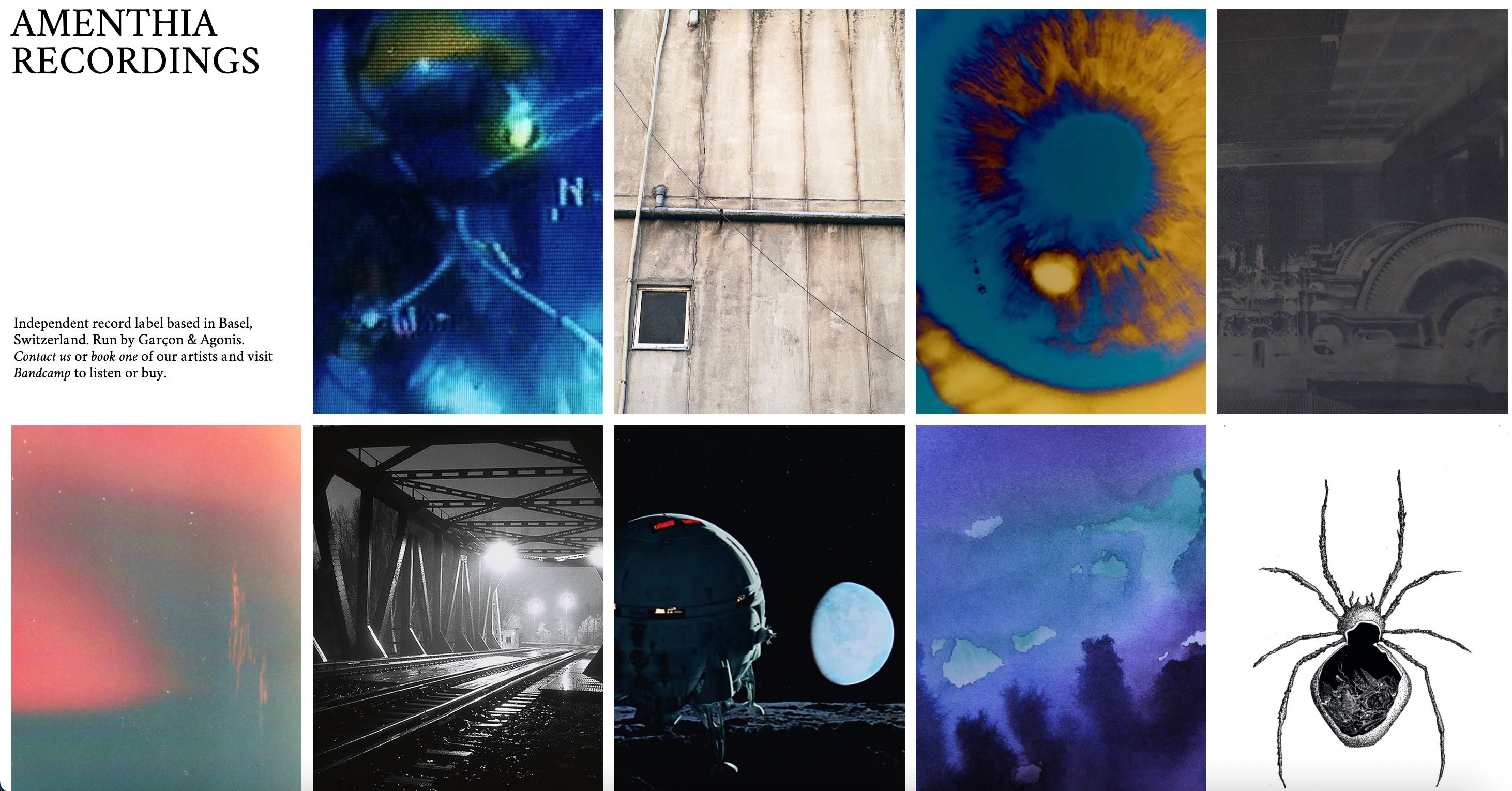
a selection of event flyers taken from amenthia’s website
around the same time as launching the label, you started the amenthia parties in basel too, why was it important to you to have a physical presence too? what do you enjoy the most about throwing your own parties?
do: we actually started throwing parties before starting a label. there were different event projects like “phae”, “wrong attitude”, “traxx up” and “shapes” long before we had the label. so as soon as we had the label it was just a logical step to do amenthia nights too. we are djs after all and the community aspect was always important. i couldn’t imagine running a record label without throwing events. that would be quite sad actually. and besides, throwing parties actually also funded the record label. pressing records is always unprofitable, especially before the bandcamp era.
de: in the end the core reason of doing what we are doing is the dancefloor. we come from the dance floor and i still love going out to just dance. it has not only shaped me as a person significantly but also as a dj. a dance floor can teach you so many things and it’s just amazing and can be so special.
has running the label or organising events changed the way you listen to music and your relationship with it in general?
de: as mentioned above the dancefloor has been the best teacher for how i listen and approach music.
do: if it had any influence, then only in the sense that music has become an even more important part of my life. i spend almost all of my free time dealing with music and a significant part of that is the label work.
is there something that you haven’t had a chance to explore yet with amenthia?
de: i’d be really keen to explore the process of releasing a mix-cd and can imagine it being really interesting. i find it such an amazing format and it has always been a big inspiration for me and also a dream to do one hehe
they’re mostly gone and i miss them a lot but idk how realistic it is in today’s world.
do: i think musically we have always done whatever we felt like doing. of course there are always more projects one could take on, but we are pretty happy with how things are going at the moment.
what has been the biggest highlight in the last 10 years of amenthia? and what are you looking forward to for the next 10?
de: that’s also hard to tell. it’s just the sum of it all i guess and it makes me so happy to see that we have grown together and are able to do what we love. it’s such a privilege and i’ll be forever grateful for that and hope we can just keep releasing music, experience things and share life together and hopefully inspire other people!
do: i have to agree with denis’s answer here. but of course the release of our first record and the release party were something very special. it was also my very first live set. and our amen:10 tour, which will end with the gig in london, has been one highlight after another. here is to the next ten years!
check out amenthia recordings’ back catalogue via their website + bandcamp + buy tickets for AMEN:10 in london here.
Discussion about this post