𝄞⨾💿✮˚.⋆ Robert Henke / Monolake 𝄞⨾💿✮˚.⋆


robert henke is someone that i feel needs no introduction. since 1995, he has been producing under the widely regarded monolake alias. a project he founded with gerhard behles initially, with torsten pröfrock (t++) joining in 2004 whilst gerhard focused his efforts on the running of ableton, monolake is now led by robert on his own. it’s hard to put into words the influence monolake has had on the wider electronic music scene, as they helped establish the sound of the famed chain reaction imprint with their dub-influenced sound whilst also playing a part in bridging together minimal techno and dubstep, with thanks to t++ who remixed shackleton for his skull disco imprint. over the course of the past 31 years, monolake have released 11 studio albums, mostly self-released alongside appearances on chain reaction. some of these albums are currently being reissued on vinyl for the first time via dutch imprint field records, focusing so far on the first three monolake albums, hongkong, gravity and most recently interstate. whilst robert notes in the interview below that the connection with field records happened quite easily, “they liked the albums, and did ask me. i said yes. sometimes things are pretty simple”, to me it feels like the perfect time to be revisiting these bodies of work that helped lay the foundations for one of the most notable sounds of the late 90s and early 00s. one that in recent years has come back to the forefront again with dub-inflected techno being heard on dancefloors across the globe and with labels & artists like richard akingbehin and his kynant records imprint, short span records, false aralia, sub basics, azu tiwaline and livwutang among others pushing the sound forward and bringing through the next generation of artists.
in a period of life where everything feels even more temporary and things move at the speed of light, witnessing an artist’s constant evolution, over 30 years later, is very inspiring. i’m part of a generation where most people move jobs or change careers every few years so to be focused on a creative practice over this extended time is something that i perhaps find the most fascinating about robert henke. and as an artist who has done a lot of interviews over the years, most notably about his various projects across music, art and technology, including his upcoming audiovisual laser performance first light at the barbican next month, i felt most compelled to talk to robert about the key motivations and inspirations behind his ever-expanding work and the routines and processes behind it all.
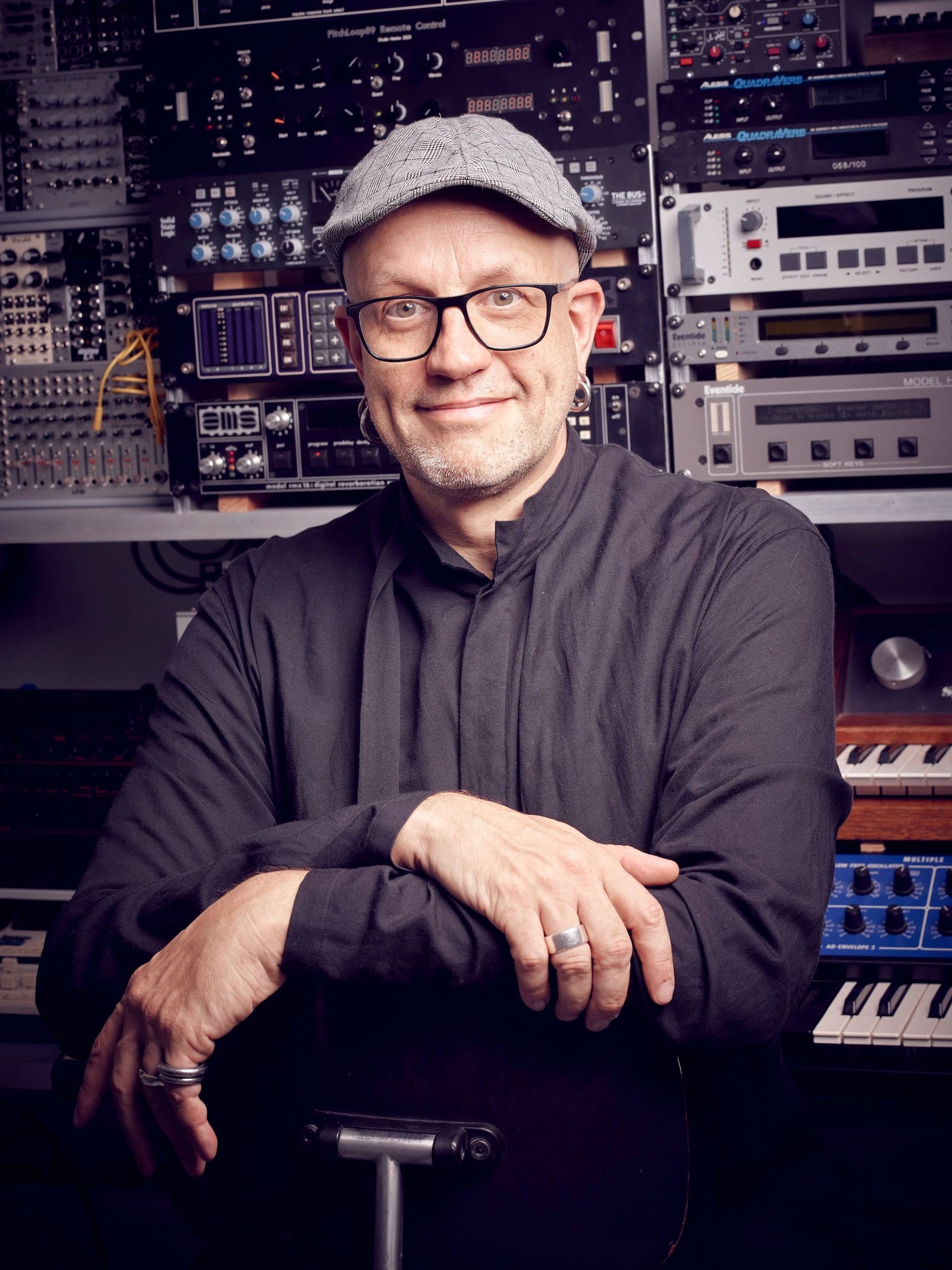
did you grow up in a house surrounded by music? when did music become an important part of your life?
no. family of engineers. got lost from being yet another siemens employee when discovering jean michel jarre as a kid.
looking back, what was your purpose or drive to make music to begin with and is it the same now?
not sure. playing with a technical thing that makes beautiful sounds is just exciting to me. ultimately, sound is what motivates me. music as organized sound in time.
how would you describe your relationship with electronic music now versus when interstate was released? what’s changed, if anything?
i just express myself. what changed is ‘electronic music’. the term became obsolete. all music is electronic. this leaves the question of how my relationship with music changed. and the answer is: i listen to a lot more diverse music and i also listen to a lot less music.
what’s your routine like? are you working on music or any other creative projects everyday? do you schedule rest days/days off?
at the moment: getting up, writing code for first light, making music for first light, going to bed. in between: going to gym, meeting friends, watering plants, fighting my anxieties.
how much does the environment you’re working in influence your output? you mentioned in a previous interview that ‘gravity’ could have only been made in the office building you were working out of at the time - why is that?
i need to feel comfortable in a physical location and i need to have a certain calm mental state. that can happen in my studio but also somewhere else. of course if i had a house in the mountains, i would make different art. how different, i don’t know.
do you still use a lot of improvisation in your work?
composition is frozen improvisation. the idea manifests itself and is captured. and if improvisation means noodling with a keyboard on stage, that was never my thing. i’d rather tell machines what to do. what i value is ‘meta control’; the kind of thing a conductor does. not re-composing on the fly but shaping what is there, to make it even more itself in a given situation. a lot of my technical efforts go into building systems that i can conduct on stage.
how much of your work is influenced by the feedback you receive? do you tend to share your work in progress with others for feedback before releasing it?
at the core, feedback does not matter, i do what i can and want to do. in a specific moment, it matters a lot. and yes, i use my friends as a test audience for big new works.
do you prefer working alone or with others?
depends on the task. i’m happy to have a partner for the programming work for first light. i don’t need a partner in the studio most of the time.
i noticed some book posts on your instagram, the most recent one is in relation to your upcoming live show at the barbican right? could you talk us through some of the books that have made the most impact on you, both personally and on your craft?
i read a lot of artist biographies. it helps to put my own struggles and ideas into a bigger picture and it inspires me. of course i also read a lot of technical books, and publications about music, composition, and art. last one i read was ‘the wonderful world that almost was: a life of peter hujar and paul thek‘ by andrew durbin which i enjoyed a lot.
what keeps you creatively inspired?
the world around me. my friends. books. other artists in all fields.
field records have been pressing the first vinyl editions of key monolake albums since 2023, first with hongkong then gravity and now interstate. how did the relationship with the label come about and what inspired the decision to revisit these albums?
they liked the albums, and did ask me. i said yes. sometimes things are pretty simple.
do you feel that the reissue of these albums relates to what is going on in the world today? do you feel any connection between the two periods of time?
music is my escape from the world. ideally i should not be in the studio at all, but become a politician in a desperate attempt to change that fucked up tech-bro fascist world into something a bit more worth living in. the 1990s in berlin had a right wing violence problem against minorities and foreigners, but overall the perspective was far more positive than it feels now, in pretty much every possible sense. there was even a euphoria about a new music culture emerging. different time, different universe.
the presence of the field recordings within the album make it feel more organic. what draws you to this?
background as a film sound person long ago. i was just carrying around a portable dat recorder with me all the time in the 1990s. field recordings are interesting because they have so much meaning, structure, rhythm that is driven by non-musical factors. they are unintentional music themselves and pair very well with intentional music.
is there a track or album that you’ve released that sounds like the truest version of you?
no. my music and my art is not me. it is simply my art. those are two different things.
everything i did is as much myself as it is the sum of all influences from the outside world.
my biggest achievement for multiple reasons so far is the cbm 8032 av performance. but that does not make it more of a mirror of myself than the very questionable early monolake track ‘magenta’.
what would your advice be to producers who are just starting out?
ignore social media, ignore record labels, ignore journalists. don’t listen to anyone who tells you how to do it right. don’t buy expensive gear. sit down and do what you like and how you like it. whatever you do is right, just do it.
copy your idols and fail. whilst doing so discover yourself. if you are stuck, do something completely different. make tons of quick sketches and don’t bother too much about making them perfect. never throw anything away, there was a reason you did start it in the first place. you might find out much later. listen / watch the work you did a year ago and check how you feel about that work now. read user manuals. dive deeply into a small number of tools.
don’t assume you will become ‘good’ one day. all you do is a process and that will never change. any ‘finished’ work is just a snapshot in time.
is there anything you haven’t done yet that you would like to do?
go on vacation ?!?!?
~ good read ~ I noticed you’re playing at Ankali this weekend ! Nice lil space, tucked out the way which I managed to check out during my visit to Prague last month 🍥