I’m thinking of you by Russell E.L. Butler


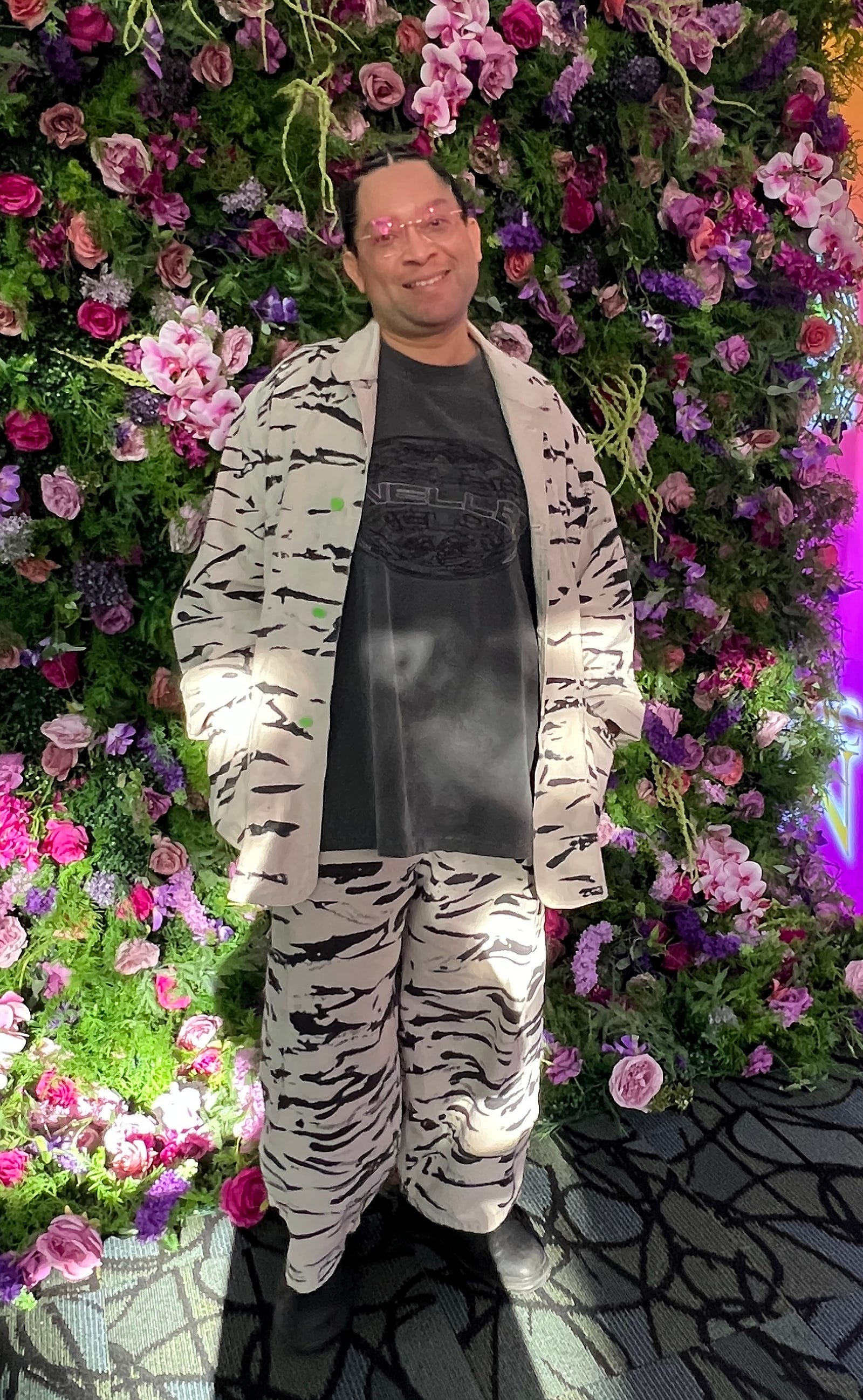
On June 27th 2021, in collaboration with my dear friend Miah Benton (adab), we presented Boyz II Them for the first time. That day would be our first time DJing together and our first in-person performance coming out of the COVID lockdown in New York. On our way to the venue I had, what I would later find out was, a panic attack. My chest tightened, my thoughts raced, my muscles tensed. Playing music, setting my mind to concentrating on one task, playing 3 records, letting Miah play 3 records, until we hit 2, and then 1, was the only thing that assuaged this anxiety.
The energy that day was incredible, it was so hot that Miah’s first 2 records melted as they spun on the turntables. But the energy was also quite dark. That day we had 5 different interactions with strangers. These party-goers tried to tell us what to do, what to play, and how to play it. Though each patron was safely escorted to the exit, the damage was done. At one point, I pulled the music out completely and yelled at a person that asked for techno. The only words that echo in my brain are “Don’t you know what we all just went through? I thought we’d never be able to do this again!” This statement united the crowd and we played uninterrupted for another few hours. My knee still aches from that day. My conscience still quivers when I think about those requests. The year that followed was defined by an absolute stranger approaching me while I was DJing and attempting to tell me what to do. This occurred at every single gig, for a year. I’ve told this tale many times. I am no longer shaken by the entitled disrespect that I have been met with. As a means of processing these experiences, I began to ask why? That question allowed the compassion in my heart to grow. I am now armed with an empathy that is fully loaded with curiosity.
One week later, after the Boyz II Them debut, I would have the honor of documenting a portion of Frankie Knuckles’ record collection as part of the Theaster Gates piece A Song for Frankie. Though I thought that I knew and understood the history of American dance music, the conversations that I would have with patrons during the run of this installation proved to be a crash course in New York’s contributions to dance music and its attendant cultures. The work that I undertook was that of a funeral director, guiding mourners through their grieving processes. I would surround them with the materials that made up their lost relative’s life. This was not just a wake for Frankie, but a wake for a culture that felt so distant from the funeral goers, as they laid down their stories as flowers on the gravestone of their hero, their lover, their friend, their neighbor, their father figure. However, I was also there to assure them that what Frankie represented lived on, not just in the night clubs that dot the city in its current era, but in the hearts, minds, living rooms, record stores, galleries, and industrial sweatboxes that cover the world.
New threads began to weave together to form a taught tendril reaching from my present experience to their recollections of the past. For that 8 week period, I was granted a gift often sought, but rarely experienced. A connection between generations. An unexpected mutual exchange that renewed an interest in an elder and validated the wanderings of a younger. This piece is meant to build on this intergenerational exchange, lengthening the rope so that you might grab it, so that maybe we can all start to build something more substantial. Perhaps a ladder or an escalator.
Finding my way
Do it because you cannot not do it. Being an artist is a combination of talent and obsession.
John Baldessari from Letters to a Young Artist
I have lost myself many times. It is quite easy to do. What is harder, perhaps, is trusting the instinct that you had something to lose in the first place.
I turned 40 this year. And for a long time I didn’t think that I would grow old. I spent a lot of time feeling alone. From the outside it seemed that I was never alone. I’ve always had friends, I had a very tight knit, active family life. But from an early age, I stood out. In my youth, my interests always lived outside of the hegemonic culture that I grew up in in Bermuda. I wanted for nothing. I grew up quite privileged. It may have been the financial access that I was granted at an early age that helped me understand that there was something else in here, something else making up the tissue of my life that I had yet to uncover. Something that would connect me to other people when I felt so disconnected from everything around me.
There would be brief moments. Acquaintances, friendships made at music and writing camps abroad, CDs bought 10 at a time, posters ripped from the middle pages of magazines. I knew that somehow through listening, writing, making up songs on my guitar, and saying the right combination of words to a stranger, I could feel as one, with them. For some time I lost myself in thinking that the validation of others could bring me to that most ancient and esoteric senses of self. But this form of relating was transactional, fleeting, rattling like a penny stuck in a soda can.
Please.
Fish me out of the dark.
I have spent the last year revisiting old selves. My past is represented by hours of recorded material. Live sets, unfinished ideas, jams with loose structure, tracks used as tools to understand new pieces of gear. When I made these, I had such low self-esteem because I was married to the idea that there was a fixed, objective, correct way of composing, presenting and distributing my work. These strictures were applied to my work because that was how I thought that my life had to be made up. This is how men sound, how they act, how they treat others, how they treat themselves. This is how adults act with performed maturity, structure, and accomplishment. These live and studio experiments were ugly, malformed, only worthy of rejection and quiet, hidden, personal consumption because they couldn’t possibly be accepted by the outside world. Because that is all that mattered. The towering structure of invisible hegemony.
I listen back to this work and I can understand now that this structure, the conservative holy individual masculine genius that I thought that I had to be, held me back. I had imposed a model onto my lived experience that did not amount to a life that I lived in. Unencumbered, now, by the shaky aspirations of youth, I could start anew. Again.
Know that you are loved
Never say you are unloved
I love you
In all the simplicity of the word
Never say you have no friend
How dare you feel that way!
I am your un known friend
Sun Ra from Message to Black Youth
My only concern in sharing these experiences is that they are useful to you. If you are a young artist or if you are young in your creative pursuits, I would like to re-present some of my words, so that a lesson in them can arise. Hopefully more questions can arise with the resolution of these lessons.
“On our way to the venue, I had what I would later find out was a panic attack.”
Taking care of my physical and mental states has been a great challenge. The anxiety that I have experienced caused me to dissociate. The depression that I experience has compounded this anxiety. I have spent a great deal of my life not caring for myself. To be honest, I didn’t think that I was worthy of breathing for a long time. When I began to pay more attention to the pressures of life and alleviating them in healthy, sustainable ways, I began to have a more grounded experience of my body. I began to feel here. Truly here. There may come a time in your life when you ask yourself a series of questions. Listen to this curious spirit. She is there to guide you into living.
Transition by Underground Resistance, closing track for that set
“For that 8 week period, I was granted a gift often sought, but rarely experienced. A connection between generations. An unexpected mutual exchange that renewed an interest in an elder and validated the wanderings of a younger.”
Seek out, establish, and care for intergenerational connections. When I was a young artist, I thought that I was thirsty for mentorship. What I really wanted was an elder artist to meet me where I was. I wanted an elder to listen to me, listen to what my concerns and challenges were, listen to what my dreams were and to offer something, anything, to me. The times that this occurred were some of the most grounding experiences that connected me further to my work, my interests, and my life. Mentorship outside of an institutional structure is stumbled upon, but I invite us all to be more proactive about making these connections. These connections are diffuse and fleeting, like magic carried by the wind. Mentorship is also not one sided. Those of us elders have much to learn from our youngers. Us reaching out to you to establish an exchange is as important as you reaching out to us. I hope that we can find each other wandering through the dark and come together to create the light that shines to guide others to us.
“Unencumbered, now, by the shaky aspirations of youth, I could start anew. Again.”
Take your time. Your process is your own. These words won’t sit well with the anxious. They won’t sit well with the ambitious. However, once again, allow your curiosity to arise. Ask, why do I want to do this? What is the rush? What pressure do I feel? Allow the answer to come to you. Take the opportunity to be brave and ask a friend these questions. Finding your own pace, finding out how creativity is situated in your life and then acting upon that information is part of the process. Being quiet, not making things, listening, opening up, making mistakes, tripping, and falling are all part of the process. You can stand to be easier on yourself. It is ok to put things down and walk away. It is ok to search, not knowing what you are looking for. This is one of the processes that make up a beautiful life.
“That day would be our first time DJing together and our first in-person performance coming out of the COVID lockdown in New York.”
Find collaborators, do things with them, and try not to be married to a particular result. Boyz II Them materialized out of a combination of shared lived experience and the desire to experiment. I came up with the name before ever meeting Miah. We had mutual friends and a mutual appreciation for each others’ work. Then, one day, I got a bit too caffeinated and dm’d them saying something like “Hey, we’re both black and nonbinary. If we ever DJ together, the project should be called Boyz II Them.” They quietly agreed. Months later, we would meet and they would speak as though this idea was already rock solid, here, concrete, and inevitable. Their confidence in my offhand musing made this idea real. Their confidence fueled mine. This formed an extremely strong bond. We wouldn’t play together for almost 2 years. This has become one of the most significant relationships of care, love, and consideration that I have experienced. A friend took a chance on me and we’re still discovering what it means to create this thing together.
“Don’t you know what we all just went through? I thought we’d never be able to do this again!”
Make connections and contributions to your local scene before considering going elsewhere. No large city, big club or festival will ever feel as good as the things that you do with the friends that you’ve made in the place that you are. I am not trying to gatekeep the big gigs and better fees or dissuade you from exploring the professionalized aspects of art making. I have definitely fucked around and found out. We are at a critical point of the industrial development of dance music. Oil and gas prices are skyrocketing, profit margins of institutions are shrinking, and the alcohol industry that supports the dance music industry is in progressive decline. All creative work is downstream from our economic conditions. Feeding the churn of the European DJ industrial complex is becoming less sustainable as a result of these conditions. A culture that is enabled by profit is not one that can provide stable, sustainable conditions for its participants. These conditions should enable participants to lead fulfilling lives of dignity. The economic conditions that govern the culture industry have an effect on curatorial decisions. Experimentation and unpredictability do not increase the odds of a financial enterprise being able to turn a profit. These conditions stymie creativity and limit opportunities for emerging artists to work consistently enough to make a living.
If you started your artistic practice in a local scene, whether designing experiences, promoting parties, DJing, producing, or performing, the answers to surviving an economy in decline will be found with your friends, your neighbors, your local institutions, and your local political representatives. This is not a statement in support of cultural nationalism or hegemony or even a statement in support of trade protectionism. Creative work requires context in order to form meaning. Meaning creates opportunities for communication and interpretation. These processes create the roles that can support an ecosystem that is in constant dialogue. This dialogue forges the connections that can create communities. The creative work that arises as the result of shared and specific lived experiences resists commodification because the process of making meaning is always changing shape as it is engaged with. Commodities cannot be produced from such fluid interactions. This instability allows for the construction of a more reliable foundation on which a community can form.
Community is not only built on shared interest, however. Community is also built by the difficult work of reconciling difference and disagreement. Finding ways to work through issues with your peers has the potential to result in stronger bonds that can resist these cultures being washed away by the economic conditions to which they are subject. In order for a statement like “Don’t you know what we all just went through?” to be effective in its rhetoric, the language of mutual understanding of the context that you inhabit must already exist. There is still no well established way to enable this process in a way that produces a consistent result. I think we should all keep trying though.
the best.
🫶🫶🫶🫶